
Façade & Garage Waterproofing
Protect Your Building and Maintain Value
Heart of America Building Solutions provides comprehensive waterproofing for façades and parking garages. Our proactive approach prevents water damage, protects structural integrity, and supports long-term asset preservation.
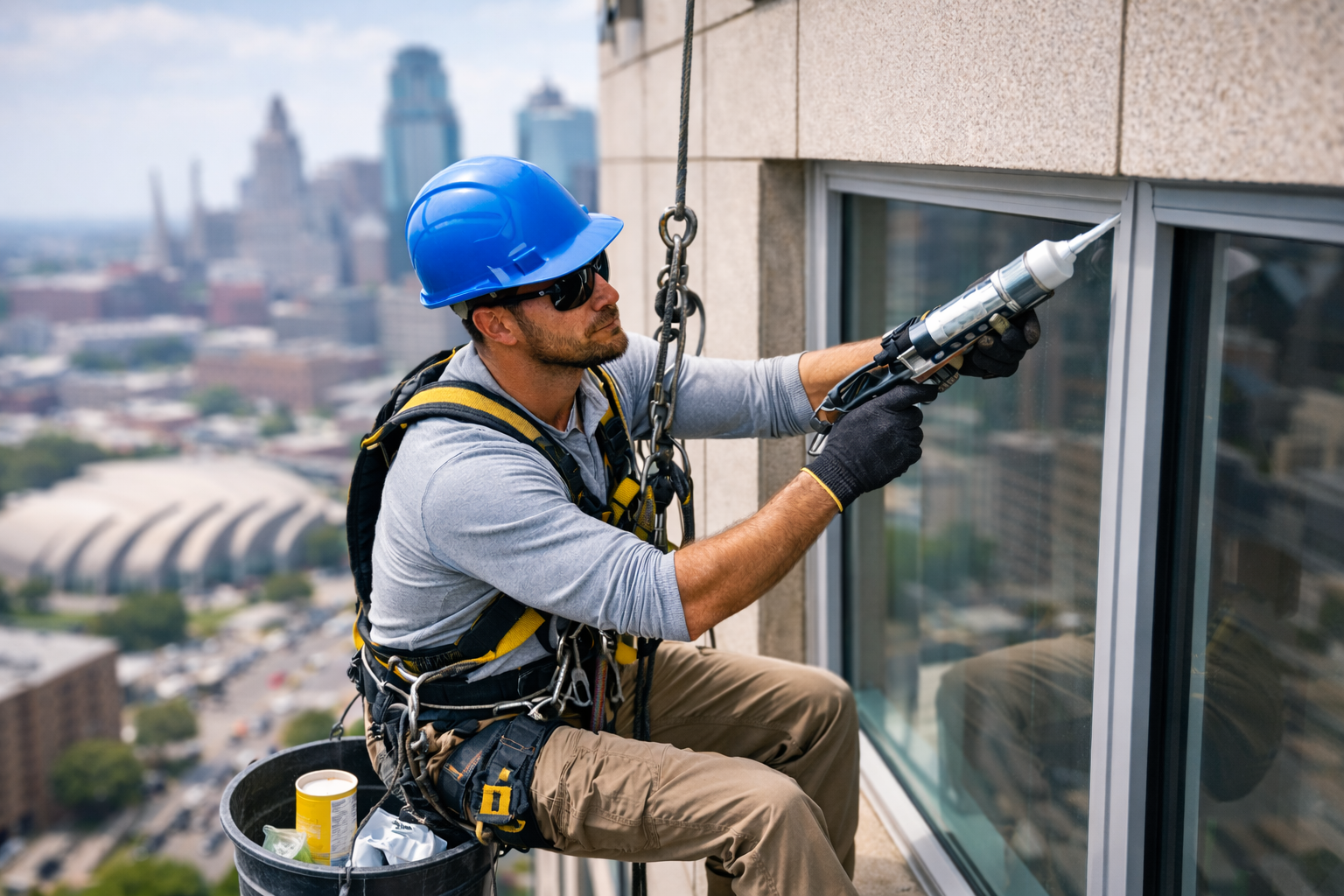
Proactive Sealing to Prevent Future Water Damage
Talk to industry experts (not salespeople)
Peace of Mind Your Building Will Weather The Storm
Proactivity
LIFECYCLE360 Visual Observation Reports are included during every service. This documentation helps owners anticipate future projects, manage risk, and plan maintenance proactively.


About Waterproofing
Façade Waterproofing
• Protective Coatings and Sealants: Shield walls, windows, and exterior surfaces from water intrusion.
• Caulking and Joint Sealing: Prevent leaks at critical points.
• Leak Investigations & Repairs: Detect and resolve current and potential water problems.
• Concrete Repairs & Surface Restoration: Ensure structural integrity while preventing future leaks.
Garage Waterproofing
• Traffic Coatings & Repairs: Protect high-traffic surfaces.
• Joint Sealants / Caulking: Prevent leaks between slabs and walls.
• Drainage Systems Installation & Repair: Proper water flow management.
• Elastomeric Coatings / Painting: Protect concrete surfaces.
• Epoxy / Urethane Injections: Seal cracks in structural concrete.
• Leak Investigations / Water Testing: Identify and mitigate water intrusion.
• Concrete Repairs & Replacement: Maintain safety and structure.
• Emergency Response & Repairs: Rapid intervention for urgent issues.
Our Promise
-

Restoration
Bringing beauty and value to your property
-

Precision
Eliminate buildup and discoloration
-

Trustworthy
Use proper cleaning methods for every material
-

Proactivity
Maintain the safety and integrity of your exterior
All HOA technicians follow OSHA guidelines and industry regulations, ensuring services are safe, compliant, and effective for both tenants and property owners.

Proactive planning
Getting Started is Simple
Request a Quote – Quick form and on-site assessment as needed.
Service Execution – Our certified technicians clean safely and effectively.
Lifecycle Insights – Receive detailed photos and findings for proactive maintenance.
Peace of Mind – Extend your building’s lifespan and maintain long-term value.

HAve Questions? We have Answers.
Frequently Asked Questions
-
Possibly not, but that depends on the existing conditions of the façade materials and associated surface and back-up wall flashings. Therefore, it is impossible to achieve a “leak-proof” façade by only addressing the joint sealants.
-
No. The term “sealer” can be misleading. The typical clear products applied to façades are generally Silane or siloxane water repellents. There are other types of water repellents as well, but the important thing to remember is that these materials are designed to slow down water absorption into the façade materials, but the do not “waterproof” the façade. Similar to a water resistant vs. waterproof watch.
-
Possibly yes. That depends on the façade design and functionality. Most modern facades are designed to allow some level of water to enter through the exterior skin but to be managed by a weather resistive barrier (WRB) within the wall cavity directly behind the skin. These types of facades are generally described drainage systems, and some have complete air barrier systems installed through the WRB. Completely sealing these types of facades at the surface may create more problems and may not allow the system to function properly. Other wall systems are described as barriers. These systems do not have the WRB secondary lines of defense and water must be completely managed at the skin. One important note for waterproof materials, whether on the face (for a barrier) or the WRB (for a drainage system), these materials must be breathable so as to not trap water vapor trying to exit to the exterior side.
-
Typically, yes. Unless there are obvious holes and/or large cracks in a barrier system, in order to properly understand the existing conditions and locate the potential source(s) of water intrusion, proper diagnosis is achieved by trained professionals through investigation and specifically localized water testing. Note: spraying water on the façade in a general area and observing water on the interior side after a period of time is NOT water testing. Water testing is a specific process to first determine the assumed construction and water management design at the face and (even more importantly) behind the face and then work in a systematic process to isolate the various components to determine the assumed water paths. The process is very much like a murder investigation – it isn’t usually the first suspect.
-
Although there are some typical signs that a façade is a drainage system, such as the presence of weep holes or weep tubes at consistent locations throughout the façade, without proper review and investigation by trained professionals, scope development is often left to chance by many so-called waterproofing companies. These types of decisions could end up costing the owner hundreds of thousands of dollars or more without solving the root problems and lead to continued water intrusion.